





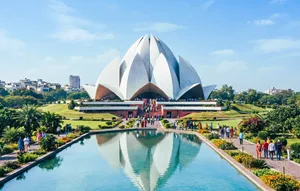
The Lotus Temple, officially known as the Baha'i House of Worship in New Delhi, stands as one of Delhi's most iconic modern landmarks. Located in the Bahapur are of Kalkaji in South Delhi, this stunning structure resembles a half-open lotus flower floating on water. Open to people of all faiths, nationalities, and backgrounds, it embodies the Baha'i principles of the oneness of God, the oneness of religion, and the oneness of humanity.
Dedicated on 24 December 1986 and opened to the public on 1 January 1987, the temple has welcomed tens of millions of visitors over the decades, making it one of the most visited buildings in the world.
History and Significance
The idea of Baha'i House of Worship in India dates back to the early 20th century. Land in Bahapur was acquired in the 1950s. Iranian-Canadian architect Fariborz Sahba was selected in 1976 after an international process. Construction by Larsen & Toubro's ECC Construction Group, with structural engineering by Flint & Neill of London, ran from 1980 to 1986.
The lotus design was chosen because of flower holds deep spiritual meaning across Indian traditions (Hinduism, Buddhism, Jainism) as a symbol of purity, beauty, and the soul's unfolding. The number nine, significant in the Baha'i Faith as representing completeness and unity, appears throughout: nine sides, nine entrances, nine surrounding pools, and 27 petals arranged in groups of three.
Unlike traditional temples, there are no idols, rituals, clergy, or sermons. Worship consists of silent prayer, meditation, and readings from the sacred scriptures of various world religions.
Architecture and Design
The temple rises about 40.8 metres high and is formed by 27 free-standing marble-clad concrete petals arranged in three concentric rings of nine. The outermost "entrance leaves" open outward to form the nine doorways. The middle and inner petals create the dramatic soaring form that culminates in a glass-and-stell skylight at the crown, flooding the central prayer hall with natural light.
White Pentelic marble from Mount Pentelikon in Greece (the same source used for the Parthenon) clads the exterior. Nine reflecting pools surround the structure, enhancing the floating-lotus effect while aiding passive cooling by drawing cooler air into the building. The central hall is column-free and can accommodate around 1,300-2,500 people depending on configuration.
The complex sits on about 26 acres of landscaped gardens with walkways, bridges, and an information centre that explains the architecture and Baha'i teachings.
Visiting Guide
Timings
- Closed every Monday (for maintenance).
- Official guidance (as listed on the Baha'i House of Worship site) has indicated Tuesday-Sunday, approximately 8:30 AM to 6:00 PM.
- Many recent visitor reports note seasonal adjustments: roughly 9:00 AM-7:00 PM in summer (April-September) and 9:00/9:30 AM-5:30 PM in winter (October-March).
- Last entry is typically 30-45 minutes before closing.
- Prayer/devotional services (readings from various scriptures, lasting 10-15 minutes) are usually held around 10 AM, 12 PM, 3 PM, and 5 PM. Schedules can vary; confirm on arrival.
Always verify current timings on the official website (https://bahaihouseofworship.in) or on-site, as hours may change for holy days, maintenance, weather, or crowd control.
Entry Fee
Completely free for all visitors. No tickets or advance booking are required for individuals. Groups of 10 or more are encouraged to make prior appointments (not available on weekends or public holidays).
Rules and Etiquette
- Dress modestly (shoulders and knees covered recommended).
- Remove footwear before entering the prayer hall (free shoe racks provided).
- Maintain complete silence inside the prayer hall.
- Photography and videography are allowed in the gardens and exterior but strictly prohibited inside the prayer hall. Keep phones on silent.
- No food, drinks, smoking, or loud behavior.
- Security screening is standard.
- The site is wheelchair accessible.
Best Time to Visit
October to March offers the most pleasant weather for walking the gardens. Within the day, early mornings (soon after opening) or late afternoons provide fewer crowds and better light for photography of the exterior. Weekdays are calmer than weekends and holidays. Allow 45-90 minutes for a full visit (gardens + prayer hall).
Facilities
Information centre, restrooms, drinking water, cloakroom, and volunteer guides who can share brief insights about the Baha'i Faith and architecture.
Conveyance Guide: How to Reach Lotus Temple
Address
Lotus Temple Road, Shambhu Dayal Bagh, Bahapur, Kalkaji, New Delhi, Delhi 110019.
By Metro (recommended)
The easiest and most reliable option.
- Nearest station: Kalkaji Mandir (interchange of Violet Line and Magenta Line), approximately 400-500 metres / 5-10 minute walk.
- Follow exit signs toward the temple (often Gate 1 or the relevant marked exit).
- Alternative: Okhla NSIC (Magenta Line, slightly farther) or Nehru Place (Violet Line).
From central Delhi (e.g., Rajiv Chowk/Connaught Place), take the Violet Line southbound. Metro is frequent, air-conditioned, and inexpensive.
By Bus
Several DTC buses serve the Kalkaji/Nehru Place/NSIC area (routes commonly mentioned include those stopping at Kalkaji Mandir, NSIC, or Nehru Place Terminal). Check current routes via the DTC app or Google Maps.
By Taxi / Auto-Rickshaw / App Cab
Readily available from anywhere in Delhi/NCR. From Connaught Place or New Delhi Railway Station expect 25-45 minutes depending on traffic (roughly 10-15 km). Use Uber, Ola, or local autos. Autos from Kalkaji Mandir metro are short and inexpensive.
By Private Car / Self-Drive
Accessible via Outer Ring Road and local roads in Kalkaji/Nehru Place. Parking is available nearby (including DDA parking opposite the main gate), but it fills quickly on weekends and holidays- arrive early. Traffic around Nehru Place can be heavy.
From Major Transport Hubs
- Indira Gandhi international Airport: 15-20 km, 30-60 minutes by cab/metro combination.
- New Delhi Railway Station: 12-15 km.
- Hazrat Nizamuddin Railway Station: closer, about 5-8 km.
Nearby Attractions
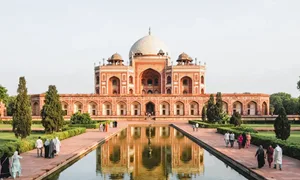
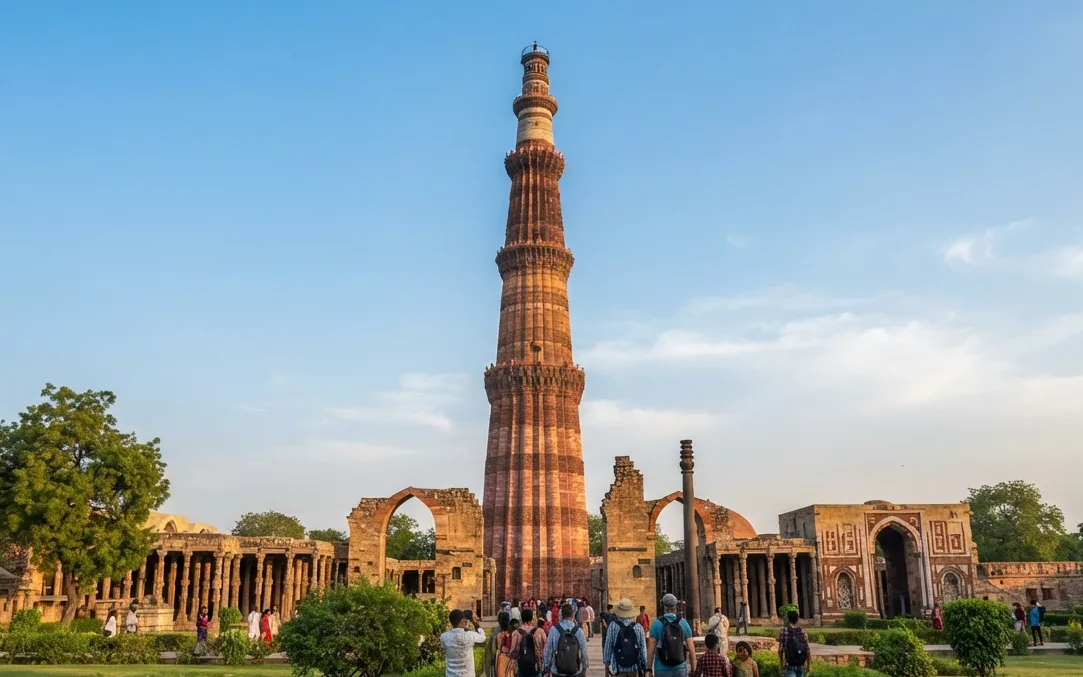
Combine your visit with Kalkaji Mandir (adjacent Hindu temple), ISKCON Temple (East of Kailash), Nehru Place market, or further afield sites such as Humayun's Tomb or Qutub Minar for a South Delhi circuit.
The Lotus Temple offers more than architectural beauty-it provides a rare space of quiet reflection amid the energy of Delhi. Whether you come for the striking design, the peaceful gardens, or a moment of mediation open to all, a visit leaves a lasting impression of unity and serenity. Check the official Baha'i House of Worship website for the latest updates before you go, and enjoy one of India's most remarkable modern landmarks.

Comments
0