





Test Cricket: Specialists with Selective Multi-Skilling
Test cricket rewards technical purity, endurance, and the ability to perform over long periods. Teams therefore prioritize specialists while using genuine all-rounders sparingly for depth.
A well-balanced Test XI typically features:
- Six specialist batsmen (including the wicketkeeper) capable of building long innings.
- Three to four specialist bowlers, with the exact mix of pace and spin dictated by conditions.
- One genuine all-rounder (often a seam-bowling all-rounder batting at No. 6 or 7).
This structure ensures quality in both disciplines without diluting either. Including too many "bits-and-pieces" players who are not strong enough as pure batsmen or pure bowlers can leave a side short in both areas. A true all-rounder who would merit selection on either skill alone provides lower-order runs and a fifth bowling option without compromise. Conditions still force adjustments-an extra spinner on turning pitches or an additional seamer in helpful conditions-but the core remains specialist-heavy.
Left-right combinations defensive solidity at the top, and the capacity for long partnerships further refine balance. A longer tail is more acceptable in Tests than in limited-overs cricket because time allows recovery, yet a genuine all-rounder still adds valuable insurance.
ODI Cricket: Five Bowling Options and Batting Depth
In 50-over cricket the rule that no bowler may deliver more than ten overs makes five genuine bowling options the practical minimum. Falling short risks overworking the frontline attack or relying on ineffective part-timers.
An effective ODI balance usually consists of:
- A top seven with strong batting depth, incorporating one or two genuine all-rounders plus useful part-time options.
- Four specialist bowlers (typically a mix of pace and spin covering powerplay, middle overs, and death).
- A wicketkeeper who contributes significantly with the bat.
This creates batting depth to No.7 or 8 while ensuring the full 50 overs can be bowled by quality operators. All-rounders are highly prized because they allow a side to field five bowlers without shortening the batting. Flexibility in batting positions is also valuable-players must be ready to move up or down according to the match situation.
Sides that prioritize six pure batsmen and only four bowlers often struggle when one bowler at the expense of a genuine batting all-rounder can leave the lower order fragile in chases or when setting totals.
T20 Cricket: Multi-Skilling, Role Specialization and Maximum Options
T20 is the most team-oriented and option-driven format. With only 20 overs and a four-over limit per bowler, captains need variety, match-up flexibility, and batting that extends deep. Traditional labels of "batsman," "bowler" and "all-rounder" become less useful; specific roles matter more.
Key elements of a balanced T20 side include:
- Power-hitters and boundary-scorers at the top and in the middle who can clear the ropes at high frequency.
- Finishers who thrive under pressure in the death overs.
- At least five (ideally six or more) bowling options so the captain can exploit match-ups, withdraw a bowler who is being targeted, and cover powerplay, middle, and death phases.
- Specialist skills: left-arm pace or spin, leg-spin, off-spin that can restrain left-handers, and players who can both hit and bowl effectively.
- Batting that reliably reaches Nos. 8 or 9 through bowling all-rounders who can clear the boundary.
A sixth bowling option is often described as one of the most valuable assets in the squad because it creates tactical freedom. Pure specialists still have a place (especially elite death bowlers or pure power-hitters), but a side overloaded with one-dimensional players lacks adaptability. The ideal modern T20 XI frequently features multiple players who can contribute in both disciplines, producing a side that bats deep and bowls with variety.
Comparative Summary and the Central Role of All-Rounders
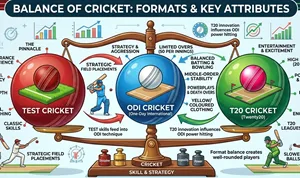
| Format | Batting Emphasis | Bowling Options | All-Rounder Importance | Typical Core Structure |
|---|---|---|---|---|
| Test | Specialists, endurance, technique | 4-5 specialists | Selective (1 genuine) | 6 batsmen (incl. keeper) + 1 AR + 4 bowlers |
| ODI | Depth to 7-8, flexible positions | Minimum 5 genuine bowlers | High | Top 7 with 1-2 ARs + 4 specialists |
| T20 | Power, strike rate, depth to 8-9 | 5-7+ for match-ups | Critical | Role specialists + multiple multi-skilled players |
All-rounders solve the fundamental budget problem of an 11-player team: they free selection spots. A genuine all-rounder who would be selected on either skills alone allows a captain to strengthen both departments simultaneously. In limited-overs cricket this is especially powerful because of the rigid over limits; in Tests it provides insurance without compromising quality.
Balance is not static. Pitch, opposition, and available personnel force adjustments, and the best sides maintain squad depth so they can adapt. Pure talent is necessary but insufficient-cohesive role clarity and complementary skills turn a collection of good players into a balanced, winning unit across the three formats of the game.


Comments
0