




1. Kedarnath Temple: Key facts
| Particular | Details |
|---|---|
| Temple name | Shri Kedarnath Dham |
| Location | Kedarnath, Rudraprayag district, Uttarakhand |
| Presiding deity | Lord Shiva |
| Altitude | Approximately 3583 metres |
| River | Mandakini |
| Religious Importance | One of the 12 Jyotirlingas |
| Pilgrimage circuits | Chota Char Dham and Panch Kedar |
| Traditional association | Adi Shankaracharya and the Pandavas |
| Architectural style | Traditional Himalayan stone architecture |
| Trekking distance | Approximately 16-17 km from Gaurikund |
| Nearest major railway station | Rishikesh / Yog Nagari Rishikesh |
| Nearest airport | Jolly Grant Airport, Dehradun |
| Best visiting period | May-June and September-October, subject to weather |
| Winter worship | Omkareshwar Temple, Ukhimath |
2. History of Kedarnath Temple
The history of Kedarnath Temple is a fascinating combination of mythology, religious traditions and historical developments.
According to Hindu tradition, the temple is closely associated with the Pandavas of the Mahabharata. It is believed that the Pandavas sought Lord Shiva's blessings to seek forgiveness for the deaths and destruction caused during the Kurukshetra War.
Legend says that Lord Shiva initially avoided meeting them and took the form of a bull. When the Pandavas recognized him, Shiva disappeared into the ground, leaving his hump visible at Kedarnath.
The remaining parts of his divine form are traditionally associated with four other sacred temples, collectively known as the Panch Kedar.
Connection with Adi Shankaracharya
The eighth-century philosopher and spiritual reformer Adi Shankaracharya is traditionally credited with reviving Kedarnath's religious importance and strengthening pilgrimage traditions in the Himalayas.
His samadhi is located near the temple complex. However, the precise construction date of the present temple and the details of its earliest history remain uncertain.
Kedarnath has undergone repairs and restoration over the centuries, while retaining its distinctive stone architecture.
3. Religious significance of Kedarnath
Kedarnath is regarded as one of the most sacred places dedicated to Lord Shiva.
One of the twelve Jyotirlingas
In Hinduism, the twelve Jyotirlingas are revered as particularly sacred manifestations of Lord Shiva. Kedarnath is among these twelve pilgrimage sites and holds special importance because of its remote Himalayan setting.
Devotees believe that worshipping Lord Shiva at Kedarnath helps them seek spiritual purification, inner peace and liberation from the cycle of birth and death.
Part of the Char Dham Yatra
Kedarnath is one of the four destinations of the Uttarakhand Chota Char Dham pilgrimage.
- Yamunotri Temple : Dedicated to Goddess Yamuna.
- Gangotri Temple : Dedicated to Goddess Ganga.
- Kedarnath Temple : Dedicated to Lord Shiva.
- Badrinath Temple : Dedicated to Lord Vishnu.
Pilgrims traditionally visit these four shrines in the order of Yamunotri, Gangotri, Kedarnath and Badrinath.
4. Architecture of Kedarnath Temple
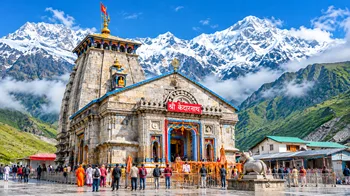
Kedarnath Temple is an impressive example of traditional Himalayan architecture.
The structure is built using massive, carefully fitted stone blocks, designed to withstand harsh mountain conditions. Some of its notable architectural features include:
- A stone-built sanctum containing the revered irregularly shaped Shiva lingam.
- A mandapa, or assembly hall, where devotees gather for prayers.
- Sculptures and religious imagery associated with Hindu deities.
- A prominent Nandi statue facing the temple entrance.
- A dramatic backdrop of snow-covered Himalayan peaks.
The temple's ability to survive severe weather and the devastating 2013 floods has made it a symbol of faith and resilience.
5. The 2013 Kedarnath disaster
One of the most tragic events in Kedarnath's modern history occurred in June 2013, when exceptionally heavy rainfall, flooding, landslides and a sudden surge of water and debris devastated the surrounding region.
The disaster affected large parts of Uttarakhand, with the Kedarnath valley suffering extensive destruction. Thousands of people across the state died or went missing, and roads, bridges, buildings and pilgrimage infrastructure were destroyed.
Remarkably, the main Kedarnath Temple structure remained standing despite the destruction around it.
The Bhim Shila
A large boulder deposited behind the temple during the disaster became known as Bhim Shila.
It is widely regarded by devotees as a protective stone because it helped divert the flow of debris around the temple.
Following the disaster, reconstruction projects improved pathways, flood protection, public facilities and pilgrimage infrastructure. Nevertheless, the Himalayan environment remains vulnerable to extreme weather and natural hazards.
6. How to reach Kedarnath Temple
Kedarnath cannot be reached directly by ordinary road transport. Pilgrims generally travel to Sonprayag, continue to Gaurikund and then trek to the temple or use authorized helicopter services.
By Air
Jolly Grant Airport near Dehradun is the nearest major airport. From there, visitors can travel by road toward Guptkashi and Sonprayag.
By Train
Rishikesh, Yog Nagari Rishikesh and Haridwar are important railway access points. Road transport is required for the remaining journey.
By road and trekking
The usual route is:
Haridwar/Rishikesh → Rudraprayag → Guptkashi → Sonprayag → Gaurikund → Kedarnath.
The Rudraprayag district administration describes the current Kedarnath trek from Gaurikund as approximately 17 km. It is a demanding mountain ascent and should not be treated as an easy walk.
7. Kedarnath trekking guide
The Kedarnath trek is one of the most memorable parts of the pilgrimage, offering dramatic views of mountains, waterfalls and the Mandakini valley.
| Trek Information | Approximate details |
|---|---|
| Starting point | Gaurikund |
| Destination | Kedarnath Temple |
| Distance | 16-17 km |
| Difficulty | Moderate to strenuous |
| Walking duration | Often 6-10 hours or longer |
| Terrain | Steep mountain paths, paved sections and steps |
| Facilities | Rest stops, refreshments and assistance at designated locations |
Walking times vary considerably with fitness, crowding, weather and trail conditions. Pilgrims should start early, follow official route instructions and avoid pushing themselves beyond their physical limits.
Helicopter services
Authorized helicopter services are another option, subject to weather, operational permissions and availability. The official registration portal directs pilgrims to IRCTC for helicopter booking. Avoid unofficial agents and websites promising guaranteed seats.
8. Kedarnath Temple opening and closing dates
The Kedarnath shrine generally opens during April or May and closes around October or November, with the dates determined according to religious traditions.
During winter, the symbolic representation of Lord Shiva is taken to Omkareshwar Temple in Ukhimath, where worship continues.
For the 2026 season, verify the final closure announcement directly with the temple committee before making travel arrangements. The official information pages contain some seasonal or older notices, so they should not be interpreted as reliable live confirmation that the shrine is open on a particular day.
9. Important places to visit around Kedarnath
Bhairavnath Temple
Situated above Kedarnath, this shrine is dedicated to Bhairava, a fierce manifestation of Lord Shiva. Devotees traditionally regard Bhairava as the protector of the Kedarnath region.
Adi Shankaracharya Samadhi
A sacred memorial near Kedarnath Temple commemorating the philosopher Adi Shankaracharya and his contribution to Hindu spiritual traditions.
Vasuki Tal
A high-altitude glacial lake reached by a challenging mountain trek. It is known for its scenic beauty and views of surrounding Himalayan peaks.
Triyuginarayan Temple
According to Hindu mythology, this temple marks the place where Lord Shiva and Goddess Parvati were married. It is a popular pilgrimage destination near Sonprayag.
Omkareshwar Temple, Ukhimath
The winter worship location associated with Kedarnath, making it particularly important when the main shrine is closed.
10. Best time to visit Kedarnath
| Period | Conditions | Travel recommendation |
|---|---|---|
| April-June | Cold mornings, relatively favorable weather during the open season | Popular pilgrimage period |
| July-August | Heavy monsoon rain, landslide and flood risks | Avoid nonessential travel during severe weather |
| September–October | Cooler temperatures and often clearer mountain views | Good option when the shrine is open |
| November–March | Heavy snowfall and winter closure | Main shrine generally inaccessible |
Uttarakhand Tourism identifies May through October as the broad visiting season, although conditions can change rapidly.
11. Accommodation and food facilities
Accommodation around Kedarnath includes basic lodges, guesthouses, tents and government-supported facilities, depending on seasonal operations.
More lodging choices are generally available in Guptkashi, Sonprayag and nearby towns.
Pilgrims should book accommodation early during peak season and confirm the exact location, cancellation terms, heating arrangements and available facilities.
Food services usually include simple vegetarian meals, tea, snacks, rice, dal, roti and other basic dishes. Prices and availability may vary because supplies must be transported into the mountains.
12. Registration process for Kedarnath Yatra
The Uttarakhand government requires pilgrims to register for the Char Dham Yatra. Registration is free through the official system.
To register, visit Tourist Care Uttarakhand and create an account. Select the destination and travel date, enter pilgrim details and generate the registration letter containing a QR code.
13. Health and safety precautions
Because Kedarnath is situated at high altitude, travelers may experience breathlessness, headaches, fatigue or altitude sickness.
Pilgrims should take the following precautions:
- Prepare physically before undertaking the trek.
- Carry warm clothing, rain protection and appropriate footwear.
- Drink water regularly and take adequate rest.
- Avoid strenuous activity immediately after reaching high altitude.
- Check official weather and landslide advisories.
- Consult a healthcare professional before traveling if you have heart, lung or other significant medical conditions.
14. Suggested four-day Kedarnath itinerary
| Duration | Places |
|---|---|
| Day 1 | Haridwar/Rishikesh to Guptkashi Travel by road through the Garhwal region and stay overnight in Guptkashi or another suitable base. |
| Day 2 | Guptkashi to Kedarnath Reach Gaurikund through Sonprayag, complete the trek and stay near Kedarnath, subject to accommodation availability. |
| Day 3 | Darshan and return trek Visit the temple, complete darshan and descend toward Gaurikund. Stay overnight in the lower valley. |
| Day 4 | Return to Rishikesh or Haridwar Travel back by road, allowing extra time for mountain traffic and weather-related delays. |
A fifth day as a weather buffer is advisable, particularly for travelers with fixed return flights or trains.
15. Frequently asked questions about Kedarnath
Where is Kedarnath Temple located ?
Kedarnath Temple is located in the Rudraprayag district of Uttarakhand, in the Garhwal Himalayan region of northern India.
Why is Kedarnath so famous ?
It is one of the twelve Jyotirlingas of Lord Shiva, part of the Chota Char Dham Yatra and an important site in the Panch Kedar tradition.
Can Kedarnath be visited throughout the year ?
No. The main shrine generally remains closed during winter because of heavy snowfall. Winter worship continues at Ukhimath.
Is the Kedarnath trek difficult ?
Yes. The approximately 17 km high-altitude ascent can be physically demanding, particularly for elderly travelers and people with limited trekking experience.
Can senior citizens visit Kedarnath ?
Yes, depending on their health and fitness. They should seek medical advice, assess the physical demands carefully and consider authorized transport assistance where appropriate.
Is photography allowed inside Kedarnath Temple ?
Photography rules can change. Visitors should follow the temple committee's instructions, particularly within the sanctum.
How many days are required for Kedarnath ?
A four- to five-day journey from Haridwar or Rishikesh is commonly planned, with additional time advisable for weather delays and acclimatization.
Kedarnath Temple is much more than a religious destination. It is a place where ancient traditions, Himalayan landscapes, spiritual devotion and remarkable cultural heritage come together.
From its legendary association with the Pandavas and Adi Shankaracharya to its survival during the devastating 2013 floods, Kedarnath continues to occupy a special place in the hearts of millions of devotees.
For pilgrims, the journey offers an opportunity for worship and reflection. For travelers, it provides an unforgettable experience of the natural beauty and cultural richness of the Indian Himalayas.
Comments
0