




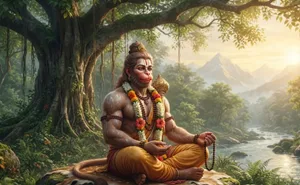
The Hanuman Chalisa is one of the most beloved devotional hymns dedicated to Lord Hanuman, the symbol of strength, devotion, courage, wisdom, and selfless service. Composed by the great poet-saint Goswami Tulsidas, it consists of 40 chaupais (verses), along with opening and closing dohas.
Devotees recite the Hanuman Chalisa to seek Lord Hanuman’s blessings, develop inner strength, overcome fear, and deepen their devotion to Lord Shri Ram. Below, you can read the complete Hanuman Chalisa in Hindi, its English transliteration, and the meaning of every verse in English.
Opening Doha 1
| Hindi Doha | English Transliteration | Meaning in English |
|---|---|---|
| श्रीगुरु चरन सरोज रज, निज मनु मुकुरु सुधारि। बरनऊँ रघुबर बिमल जसु, जो दायकु फल चारि॥ | Shri Guru Charan Saroj Raj, Nij Manu Mukur Sudhari। Baranau Raghubar Bimal Jasu, Jo Dayaku Phal Chari॥ | Having cleansed the mirror of my mind with the dust of my Guru’s lotus feet, I describe the pure glory of Lord Rama, which bestows the four fruits of life: Dharma, Artha, Kama, and Moksha. |
Opening Doha 2
| Hindi Doha | English Transliteration | Meaning in English |
|---|---|---|
| बुद्धिहीन तनु जानिके, सुमिरौं पवन-कुमार। बल बुद्धि विद्या देहु मोहिं, हरहु कलेस बिकार॥ | Buddhiheen Tanu Janike, Sumirau Pavan-Kumar। Bal Buddhi Vidya Dehu Mohi, Harahu Kalesh Vikar॥ | Knowing myself to be lacking in wisdom, I remember you, O Son of the Wind. Bless me with strength, intelligence, and knowledge, and remove my troubles and shortcomings. |
Hanuman Chalisa: All 40 Chaupais in Hindi, English and Meaning
| No. | Hindi Chaupai | English Transliteration | Meaning in English |
|---|---|---|---|
| 1 | जय हनुमान ज्ञान गुन सागर। जय कपीस तिहुँ लोक उजागर॥ | Jai Hanuman Gyan Gun Sagar। Jai Kapis Tihun Lok Ujagar॥ | Victory to Hanuman, the ocean of wisdom and virtues. Glory to the king of the Vanaras, whose fame shines throughout the three worlds. |
| 2 | राम दूत अतुलित बल धामा। अंजनि-पुत्र पवनसुत नामा॥ | Ram Doot Atulit Bal Dhama। Anjani-Putra Pavan Sut Nama॥ | You are Lord Rama’s messenger and the abode of incomparable strength. You are known as Anjani’s son and the Son of the Wind God. |
| 3 | महाबीर बिक्रम बजरंगी। कुमति निवार सुमति के संगी॥ | Mahabir Bikram Bajrangi। Kumati Nivar Sumati Ke Sangi॥ | O mighty and courageous Hanuman, whose body is strong as a thunderbolt, you remove evil thoughts and support wisdom. |
| 4 | कंचन बरन बिराज सुबेसा। कानन कुंडल कुंचित केसा॥ | Kanchan Baran Biraj Subesa। Kanan Kundal Kunchit Kesa॥ | Your golden complexion shines beautifully. You wear earrings and have curly hair. |
| 5 | हाथ बज्र औ ध्वजा बिराजै। काँधे मूँज जनेऊ साजै॥ | Hath Bajra Au Dhvaja Birajai। Kandhe Moonj Janeu Sajai॥ | You hold a thunderbolt and a flag in your hands, while the sacred thread adorns your shoulder. |
| 6 | शंकर सुवन केसरी नंदन। तेज प्रताप महा जग वंदन॥ | Shankar Suvan Kesari Nandan। Tej Pratap Maha Jag Vandan॥ | You are regarded as a manifestation of Lord Shiva and the son of Kesari. Your radiance and glory are revered throughout the world. |
| 7 | विद्यावान गुनी अति चातुर। राम काज करिबे को आतुर॥ | Vidyavan Guni Ati Chatur। Ram Kaj Karibe Ko Atur॥ | You are learned, virtuous, and exceptionally wise, always eager to carry out Lord Rama’s work. |
| 8 | प्रभु चरित्र सुनिबे को रसिया। राम लखन सीता मन बसिया॥ | Prabhu Charitra Sunibe Ko Rasiya। Ram Lakhan Sita Man Basiya॥ | You delight in hearing the stories of the Lord. Lord Rama, Lakshmana, and Sita dwell in your heart. |
| 9 | सूक्ष्म रूप धरि सियहिं दिखावा। विकट रूप धरि लंक जरावा॥ | Sukshma Roop Dhari Siyahi Dikhava। Vikat Roop Dhari Lanka Jarava॥ | You took a tiny form to appear before Sita and a formidable form to burn Lanka. |
| 10 | भीम रूप धरि असुर सँहारे। रामचंद्र के काज सँवारे॥ | Bhim Roop Dhari Asur Sanhare। Ramchandra Ke Kaj Sanvare॥ | You assumed a mighty form to destroy demons and successfully completed Lord Rama’s mission. |
| 11 | लाय सजीवन लखन जियाए। श्रीरघुबीर हरषि उर लाए॥ | Laye Sajivan Lakhan Jiyaye। Shri Raghubir Harashi Ur Laye॥ | You brought the life-restoring herb and revived Lakshmana. Lord Rama joyfully embraced you. |
| 12 | रघुपति कीन्ही बहुत बड़ाई। तुम मम प्रिय भरतहि सम भाई॥ | Raghupati Kinhi Bahut Badai। Tum Mam Priya Bharatahi Sam Bhai॥ | Lord Rama praised you greatly and said that you were as dear to him as his brother Bharata. |
| 13 | सहस बदन तुम्हरो जस गावैं। अस कहि श्रीपति कंठ लगावैं॥ | Sahas Badan Tumharo Jas Gaven। As Kahi Shripati Kanth Lagaven॥ | Lord Rama embraced you, saying that even a thousand mouths could sing your glory. |
| 14 | सनकादिक ब्रह्मादि मुनीसा। नारद सारद सहित अहीसा॥ | Sanakadik Brahmadi Munisa। Narad Sarad Sahit Ahisa॥ | Sages such as Sanaka, Brahma, Narada, Saraswati, and Sheshanaga sing your praises. |
| 15 | जम कुबेर दिगपाल जहाँ ते। कवि कोविद कहि सके कहाँ ते॥ | Yam Kuber Digpal Jahan Te। Kavi Kovid Kahi Sake Kahan Te॥ | Even Yama, Kubera, the guardians of the directions, and learned poets cannot fully describe your glory. |
| 16 | तुम उपकार सुग्रीवहिं कीन्हा। राम मिलाय राज पद दीन्हा॥ | Tum Upkar Sugrivahi Kinha। Ram Milay Raj Pad Dinha॥ | You helped Sugriva by introducing him to Lord Rama, who restored his rightful kingdom. |
| 17 | तुम्हरो मंत्र विभीषण माना। लंकेश्वर भए सब जग जाना॥ | Tumharo Mantra Vibhishan Mana। Lankeshwar Bhaye Sab Jag Jana॥ | Vibhishana followed your counsel and became the king of Lanka, as the whole world knows. |
| 18 | जुग सहस्र जोजन पर भानू। लील्यो ताहि मधुर फल जानू॥ | Yug Sahasra Yojan Par Bhanu। Lilyo Tahi Madhur Phal Janu॥ | Seeing the sun far away, you leapt toward it, mistaking it for a sweet fruit. |
| 19 | प्रभु मुद्रिका मेलि मुख माहीं। जलधि लाँघि गये अचरज नाहीं॥ | Prabhu Mudrika Meli Mukh Mahi। Jaladhi Langhi Gaye Acharaj Nahi॥ | Carrying Lord Rama’s ring in your mouth, you crossed the ocean; for you, such a feat was no surprise. |
| 20 | दुर्गम काज जगत के जेते। सुगम अनुग्रह तुम्हरे तेते॥ | Durgam Kaj Jagat Ke Jete। Sugam Anugrah Tumhare Tete॥ | By your grace, even the most difficult tasks in the world become easier to accomplish. |
| 21 | राम दुआरे तुम रखवारे। होत न आज्ञा बिनु पैसारे॥ | Ram Duare Tum Rakhvare। Hot Na Agya Binu Paisare॥ | You guard the entrance to Lord Rama’s presence; without your permission, no one can enter. |
| 22 | सब सुख लहै तुम्हारी सरना। तुम रक्षक काहू को डरना॥ | Sab Sukh Lahai Tumhari Sarna। Tum Rakshak Kahu Ko Darna॥ | Those who take refuge in you receive comfort and protection. With you as their guardian, they need not fear. |
| 23 | आपन तेज सम्हारो आपै। तीनों लोक हाँक तें काँपै॥ | Aapan Tej Samharo Aapai। Tinon Lok Hank Te Kanpai॥ | Only you can fully control your immense power; your mighty roar makes the three worlds tremble. |
| 24 | भूत पिशाच निकट नहिं आवै। महाबीर जब नाम सुनावै॥ | Bhoot Pishach Nikat Nahi Aavai। Mahabir Jab Naam Sunavai॥ | Evil spirits and negative forces are said to stay away when the name of mighty Hanuman is invoked. |
| 25 | नासै रोग हरै सब पीरा। जपत निरंतर हनुमत बीरा॥ | Nasai Rog Harai Sab Peera। Japat Nirantar Hanumat Beera॥ | Devotees believe that continuously remembering brave Hanuman brings comfort amid illness, pain, and suffering. |
| 26 | संकट तें हनुमान छुड़ावै। मन क्रम वचन ध्यान जो लावै॥ | Sankat Te Hanuman Chhudavai। Man Kram Vachan Dhyan Jo Lavai॥ | Hanuman is believed to help devotees overcome difficulties when they remember him sincerely in thought, action, and speech. |
| 27 | सब पर राम तपस्वी राजा। तिनके काज सकल तुम साजा॥ | Sab Par Ram Tapasvi Raja। Tinke Kaj Sakal Tum Saja॥ | Lord Rama, the noble and disciplined king, reigns supreme, and you carry out all his missions. |
| 28 | और मनोरथ जो कोई लावै। सोई अमित जीवन फल पावै॥ | Aur Manorath Jo Koi Lavai। Soi Amit Jivan Phal Pavai॥ | Those who approach you with sincere wishes are believed to receive abundant blessings and spiritual rewards. |
| 29 | चारों जुग परताप तुम्हारा। है परसिद्ध जगत उजियारा॥ | Charau Jug Partap Tumhara। Hai Parsiddh Jagat Ujiyara॥ | Your glory shines through all four ages, and your fame illuminates the world. |
| 30 | साधु संत के तुम रखवारे। असुर निकंदन राम दुलारे॥ | Sadhu Sant Ke Tum Rakhvare। Asur Nikandan Ram Dulare॥ | You protect saints and good people, destroy evil, and are dearly loved by Lord Rama. |
| 31 | अष्ट सिद्धि नौ निधि के दाता। अस बर दीन जानकी माता॥ | Ashta Siddhi Nau Nidhi Ke Data। As Var Deen Janaki Mata॥ | Mother Sita granted you the blessing to bestow the eight spiritual powers and the nine treasures. |
| 32 | राम रसायन तुम्हरे पासा। सदा रहो रघुपति के दासा॥ | Ram Rasayan Tumhare Pasa। Sada Raho Raghupati Ke Dasa॥ | You possess the essence of devotion to Lord Rama and remain forever his devoted servant. |
| 33 | तुम्हरे भजन राम को पावै। जनम जनम के दुख बिसरावै॥ | Tumhare Bhajan Ram Ko Pavai। Janam Janam Ke Dukh Bisravai॥ | Through devotion to you, devotees can reach Lord Rama and find release from the sorrows associated with repeated births. |
| 34 | अंत काल रघुबर पुर जाई। जहाँ जन्म हरि-भक्त कहाई॥ | Ant Kaal Raghubar Pur Jai। Jahan Janma Hari-Bhakt Kahai॥ | At the end of life, your devotees are believed to attain Lord Rama’s abode or be reborn as devotees of God. |
| 35 | और देवता चित्त न धरई। हनुमत सेइ सर्व सुख करई॥ | Aur Devata Chitt Na Dharai। Hanumat Sei Sarva Sukh Karai॥ | Those who devote themselves wholeheartedly to Hanuman are said to receive happiness and spiritual fulfillment. |
| 36 | संकट कटै मिटै सब पीरा। जो सुमिरै हनुमत बलबीरा॥ | Sankat Kate Mite Sab Peera। Jo Sumirai Hanumat Balbeera॥ | Difficulties and suffering are believed to diminish for those who remember powerful and courageous Hanuman. |
| 37 | जय जय जय हनुमान गोसाईं। कृपा करहु गुरुदेव की नाईं॥ | Jai Jai Jai Hanuman Gosai। Kripa Karahu Gurudev Ki Nai॥ | Glory, glory, glory to Lord Hanuman! Please bless us with compassion like a revered spiritual teacher. |
| 38 | जो सत बार पाठ कर कोई। छूटहि बंदि महा सुख होई॥ | Jo Sat Bar Path Kar Koi। Chhutahi Bandi Maha Sukh Hoi॥ | The verse says that one who recites the Chalisa a hundred times with devotion may be freed from bondage and attain great happiness. |
| 39 | जो यह पढ़ै हनुमान चालीसा। होय सिद्धि साखी गौरीसा॥ | Jo Yah Padhe Hanuman Chalisa। Hoye Siddhi Sakhi Gaurisa॥ | Whoever reads the Hanuman Chalisa with devotion may attain spiritual fulfillment; Lord Shiva is invoked as witness to this promise. |
| 40 | तुलसीदास सदा हरि चेरा। कीजै नाथ हृदय महँ डेरा॥ | Tulsidas Sada Hari Chera। Kijai Nath Hriday Mah Dera॥ | Tulsidas declares himself to be forever the servant of God and asks Lord Hanuman to reside in his heart. |
Closing Doha
| Hindi Doha | English Transliteration | Meaning in English |
|---|---|---|
| पवनतनय संकट हरन, मंगल मूरति रूप। राम लखन सीता सहित, हृदय बसहु सुर भूप॥ | Pavan Tanay Sankat Haran, Mangal Murati Roop। Ram Lakhan Sita Sahit, Hriday Basahu Sur Bhoop॥ | O Son of the Wind, remover of difficulties and embodiment of auspiciousness, please reside in my heart along with Lord Rama, Lakshmana, and Sita. |
Who Is Lord Hanuman?
Lord Hanuman is one of the most revered figures in Hindu tradition. He is known for his extraordinary strength, wisdom, courage, humility, and unwavering devotion to Lord Rama. He plays an important role in the Ramayana, particularly in the search for Goddess Sita and the battle against Ravana.
Hanuman is also known as Bajrangbali, Pavanputra, Anjaneya, Maruti, and Sankat Mochan. Devotees worship him for inspiration, discipline, courage, and steadfast faith.
Significance of the Hanuman Chalisa
The Hanuman Chalisa is a devotional composition that praises Lord Hanuman’s qualities, heroic deeds, and dedication to Lord Rama.
Its spiritual significance includes:
Devotion to Lord Rama: It celebrates Hanuman’s selfless service and unwavering loyalty.
Courage and strength: Its verses remind devotees to face challenges with determination.
Wisdom and humility: Hanuman represents the importance of combining knowledge with service.
Faith and perseverance: The Chalisa encourages trust, patience, and commitment during difficult times.
Spiritual reflection: Regular recitation can become a meaningful part of a personal prayer routine.
Benefits of Reciting Hanuman Chalisa
Many devotees recite the Hanuman Chalisa as part of their daily worship. Traditionally, it is believed to offer the following spiritual benefits:
Courage and confidence: Remembering Hanuman can inspire strength when facing challenges.
Peace of mind: Prayer and focused recitation may provide comfort and calm.
Greater devotion: The Chalisa encourages faith in Lord Hanuman and Lord Rama.
Positive thinking: Its themes of courage, service, and perseverance can encourage a constructive outlook.
Discipline and concentration: A regular prayer routine can support mindfulness and consistency.
Hope during difficult times: Devotees often turn to Hanuman as Sankat Mochan, the remover of troubles.
These are traditional religious beliefs and personal spiritual benefits, not guarantees of medical, financial, or other worldly outcomes.
How to Recite Hanuman Chalisa
You can recite the Hanuman Chalisa at home, in a temple, or in another quiet place.
Choose a peaceful place: Sit comfortably and keep your surroundings clean.
Begin with prayer: Remember Lord Ganesha, Lord Rama, and Lord Hanuman according to your family tradition.
Read with attention: Recite the verses in Hindi or follow the English transliteration.
Understand the meaning: Reflect on the values of courage, humility, wisdom, and devotion.
Maintain regularity: You may recite it daily or on Tuesdays and Saturdays, which are commonly associated with Hanuman worship.
Conclude with a prayer: Ask for strength, wisdom, and the ability to act with honesty and compassion.
There is no need to rush. Sincere devotion and understanding are more important than speed.
Frequently Asked Questions (FAQs)
1. Who wrote the Hanuman Chalisa?
The Hanuman Chalisa is traditionally attributed to Goswami Tulsidas, the renowned poet-saint associated with the Ramcharitmanas.
2. How many verses are in the Hanuman Chalisa?
The Hanuman Chalisa contains 40 chaupais. It is traditionally accompanied by two opening dohas and a closing doha.
3. What is the meaning of Hanuman Chalisa?
The Hanuman Chalisa praises Lord Hanuman’s strength, wisdom, courage, and devotion to Lord Rama. It expresses the devotee’s faith and seeks divine grace and spiritual strength.
4. When should Hanuman Chalisa be recited?
Devotees may recite it at any time. Many prefer the morning, evening, Tuesdays, or Saturdays as part of their worship routine.
5. Can beginners read Hanuman Chalisa in English?
Yes. Beginners can use the English transliteration to pronounce the Hindi verses and the English meanings to understand their message.
6. Why is Lord Hanuman called Sankat Mochan?
Sankat Mochan means “the remover of difficulties.” The name reflects the traditional belief that remembering Lord Hanuman provides courage, hope, and spiritual support during challenging times.
7. Can Hanuman Chalisa be recited every day?
Yes. Many devotees recite it daily as an expression of faith and as a regular spiritual practice.
Conclusion
The Hanuman Chalisa is more than a devotional hymn. It is a celebration of courage, wisdom, humility, perseverance, and unwavering devotion. Its forty chaupais describe Lord Hanuman’s extraordinary deeds and his dedication to Lord Rama.
Reading the Hanuman Chalisa in Hindi, following its English transliteration, and understanding its meaning can help devotees connect more deeply with its message. Whether recited daily or on special occasions, it remains an important part of Hindu devotional tradition.
Jai Bajrangbali! Jai Shri Ram!
Comments
0