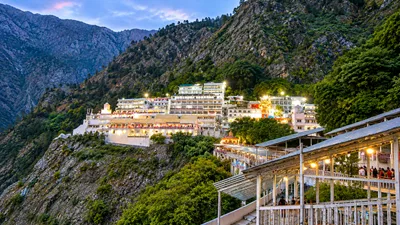





Vaishno Devi Temple: Key Information
| Particular | Details |
|---|---|
| Temple Name | Shri Mata Vaishno Devi Shrine |
| Location | Trikuta Hills, Katra, Reasi, Jammu and Kashmir |
| Presiding deity | Mata Vaishno Devi |
| Altitude | Approximately 5,200 feet |
| Base town | Katra |
| Trek distance | Approximately 12-13 km to Bhawan |
| Main shrine | Holy Cave and three Pindies |
| Opening | Darshan operates throughout the year, subject to conditions |
| Best time to visit | March-April and September-November |
| Nearest Railway Station | Shri Mata Vaishno Devi Katra |
| Nearest major airport | Jammy Airport |
| Shrine management | Shir Mata Vaishno Devi Shrine Board |
| Official Website | Shir Mata Vaishno Devi Shrine Board |
1. History of Vaishno Devi Temple
The history of Vaishno Devi is deeply connected with Hindu religious traditions, ancient legends and the spiritual heritage of the Trikuta Mountains.
According to religious belief, Mata Vaishno Devi manifested to uphold righteousness and protect devotees from evil. The goddess is regarded as a manifestation of divine feminine power, or Shakti.
The legend of Mata Vaishno Devi
According to a widely followed tradition, Vaishnavi was born with extraordinary spiritual qualities and devoted her life to meditation and worship.
She eventually travelled to the Trikuta Mountains to perform penance.
The legend describes Bhairon Nath, a spiritual practitioner who pursued Vaishnavi despite her wish to remain devoted to meditation.
To escape him, Mata Vaishno Devi travelled through the mountains, stopping at several places that later became important pilgrimage sites.
These include Banganga, Charan Paduka and Ardhkuwari.
At Ardhkuwari, the goddess is believed to have meditated inside a narrow cave known as Garbh Joon for nine months.
According to the tradition, she subsequently reached the mountains near the present-day Bhawan, where she defeated Bhairon Nath.
Bhairon Nath sought forgiveness, and the goddess granted him liberation. The legend further holds that pilgrims should visit Bhairon Temple after receiving darshan at the main shrine.
These accounts form part of the shrine's religious tradition rather than independently established historical events.
Discovery of the holy cave
Another popular tradition associates the discovery of the shrine with Pandit Shridhar, a devotee who organized a religious gathering and received a divine vision.
The goddess is believed to have guided him towards the sacred cave in the Trikuta Mountains.
The exact historical date of the shrine's origin is not established, but its religious importance has developed over many generations.
2. Religious Significance of Vaishno Devi
The main shrine is associated with three manifestations of divine power.
- Maha Kali: Represents strength, protection and the destruction of evil.
- Maha Lakshmi: Represents prosperity, well-being and abundance.
- Maha Saraswati: Represents wisdom, learning and knowledge.
Together, the three Holy Pindies symbolize the divine powers worshipped at Vaishno Devi.
Devotees believe that visiting the shrine with sincerity and faith brings spiritual peace and blessings.
The pilgrimage is particularly important during Chaitra Navratri and Sharad Navratri, when large numbers of devotees visit Katra and the holy shrine.
3. How to Reach Vaishno Devi Temple
Katra serves as the main base for pilgrims travelling to the shrine. It is connected with major Indian cities by rail and road, while Jammu provides the nearest major airport.
By Train
The nearest railway station is Shri Mata Vaishno Devi Katra (SVDK).
Direct and connecting trains operate from several cities, including New Delhi and other major railway centres. Train availability depends on the route and travel date.
From Katra railway station, pilgrims can travel to their hotel or the yatra starting point using local transportation.
By Air
Jammu Airport is the nearest major airport, approximately 50 km from Katra by road. Travelers can hire a taxi or use available road transportation to reach Katra.
By Road
Katra is accessible by road from Jammu and other parts of northern India. Approximate road distances:
| Starting point | Distance to Katra |
|---|---|
| Jammu | 45-50 km |
| Udhampur | 35-45 km |
| Amritsar | 250-270 km |
| Chandigarh | 390-420 km |
| New Delhi | 620-660 km |
4. Vaishno Devi Yatra Route and Important Stops
The traditional pilgrimage from Katra to Bhawan is approximately 13 km, although the actual distance varies with the route and starting point.
| Location | Approximately distance from Katra |
|---|---|
| Banganga | 1 km |
| Charan Paduka | 2.5 km |
| Ardhkuwari | 6 km |
| Himkoti | 8.5 km |
| Sanjichhat | 9.5 km |
| Vaishno Devi Bhawan | 13 km |
| Bhairon Ghati (via Bhawan) | 14.5 km |
Banganga
A sacred watercourse associated with the legend of Mata Vaishno Devi. Many devotees stop here before continuing uphill.
Charan Paduka
Traditionally believed to mark the footprints of the goddess. It is an important religious stop along the old route.
Ardhkuwari and Garbh Joon
Associated with the goddess's meditation. The narrow Garbh Joon cave is a major attraction, but queues can be lengthy.
Himkoti
A scenic section of the alternative track with mountain views, resting facilities and refreshment points.
Sanjichhat
Located at a higher elevation than Bhawan, Sanjichhat is also where the helicopter service terminates.
Bhairon Nath Temple
Located approximately 1.5–2 km beyond Bhawan on the traditional route, it is visited after the main shrine. A ropeway is available for easier access.
5. Vaishno Devi Yatra Registration: Step-by-Step Process
Yatra registration is mandatory, and pilgrims must obtain an RFID-based Yatra Access Card before proceeding on the pilgrimage.
The Shrine Board provides online registration and designated registration counters.
Online Registration
- Visit the official Vaishno Devi online services portal.
- Create or sign in to your pilgrim account.
- Select the available yatra registration service.
- Enter the required pilgrim information and travel details.
- Complete the registration and save the confirmation.
- Collect your physical RFID access card at an authorized counter before beginning the trek.
Online registration confirmation alone does not replace the required RFID card.
Offline Registration
Pilgrims may also use authorized registration counters in Katra, including those at the bus stand and railway station.
Carry a valid identity document and follow the registration instructions displayed at the counter.
The Shrine Board states that yatra registration is free
6. Trekking, Helicopter, Battery Car and Other Travel Options
Walking or trekking
The most traditional option. Allow approximately 4–7 hours uphill depending on fitness, route, weather and rest stops. The descent may take another 3–5 hours.
Helicopter Service
Operates between Katra and Sanjichhat, subject to weather, operational conditions and ticket availability. Pilgrims must still travel from Sanjichhat to Bhawan.
Battery Operated Vehicles
Available on designated sections of the alternative track, particularly between Ardhkuwari/Inderprastha and Bhawan, with eligibility and availability conditions.
Ponies, pithoos and palkis
Registered operators provide assistance on permitted routes. Confirm official rates and registration details before hiring.
The Shrine Board describes the alternative track as a gentler, pony-free route from near Ardhkuwari towards Bhawan. Battery vehicle services are subject to availability and applicable rules.
Bhawan to Bhairon Temple Ropeway
The ropeway connects Bhawan with Bhairon Temple and is especially useful for pilgrims who want to avoid the steep additional climb.
The Shrine Board currently lists its operating hours as 9 AM to 5 PM, subject to operational and weather conditions.
For current helicopter fares, ropeway tickets and battery car availability, use the official Shrine Board portal rather than relying on old price lists.
7. Vaishno Devi Darshan Timings and Procedure
The pilgrimage operates throughout the year, but access to the Holy Cave, crowd movement and darshan arrangements are regulated by the Shrine Board.
The temple conducts Aarti twice daily, once in the morning and once in the evening. Temporary restrictions or delays may occur during ceremonies, severe weather or heavy pilgrim movement.
Darshan process at Bhawan
- Reach Bhawan with your RFID Yatra Access Card.
- Follow the designated queue and security arrangements.
- Deposit prohibited belongings at authorized cloakrooms.
- Follow the instructions for your designated darshan entry.
- Enter the shrine and receive darshan of the three Holy Pindies.
- Collect permitted offerings or prasad as directed.
- Continue to Bhairon Temple if you wish to complete the traditional pilgrimage.
The original narrow Holy Cave is not necessarily available for passage throughout the year. Pilgrims generally use the designated darshan passages according to Shrine Board arrangements.
8. Accommodation in Katra and Near Vaishno Devi
Katra has a wide range of accommodation, including budget guesthouses, mid-range hotels and premium properties.
The Shrine Board also operates accommodation at Jammu, Katra, Ardhkuwari, Sanjichhat and Bhawan, including rooms and dormitories. Advance reservations are advisable during weekends, holidays and Navratri.
| Accommodation | Indicative budget per night |
|---|---|
| Budget guesthouse | ₹700–₹1,500 |
| Mid-range hotel | ₹1,500–₹3,500 |
| Premium hotel | ₹3,500–₹8,000 |
| Shrine Board accommodation | Check official rates |
These hotel amounts are planning estimates, not verified live quotations. For official rooms and dormitories, use Shrine Board accommodation booking
9. Vaishno Devi Yatra Estimated Budget
A pilgrim's total expenses depend on transportation, accommodation, food and optional services.
| Expenses | Estimated cost per person |
|---|---|
| Yatra Registration | Free |
| Budget accommodation share | ₹500–₹1,500 |
| Meals and refreshments | ₹400–₹900 |
| Local transportation | ₹200–₹600 |
| Miscellaneous expenses | ₹200–₹500 |
A practical budget for a two-day trip beginning and ending in Katra is approximately ₹1,300–₹3,900 per person, excluding travel to Katra and optional helicopter, pony, palki or ropeway services. These are estimates rather than official tariffs.
10. Suggested Two-Day Vaishno Devi Itinerary
Day 1 - Arrival in Katra and Yatra
Arrive in Katra, check into your accommodation, collect the RFID card and prepare your essentials. Begin the trek early enough to allow sufficient time for rest and darshan. Depending on your fitness and crowd conditions, stay at Bhawan or return later.
Day 2 - Bhairon Temple and Return
Complete any remaining darshan, visit Bhairon Temple and descend towards Katra. Rest, enjoy a meal and depart after allowing adequate time for unexpected delays.
First-time visitors, families with children and elderly pilgrims may prefer a three-day itinerary to avoid rushing the pilgrimage.
11. Places to Visit Near Vaishno Devi
Baba Dhansar
A religious site associated with Lord Shiva, known for its natural water features and scenic surroundings.
Shiv Khori
A cave shrine associated with nine forms of the goddess, located in the wider Katra area.
Jhajjar Kotli
A riverside recreation destination known for its natural scenery and picnic spots.
12. Food and Facilities During the Yatra
Pilgrims can find vegetarian meals, drinking water, refreshments, toilets, resting shelters and medical assistance at designated locations along the pilgrimage route.
The Shrine Board operates facilities intended to make the journey manageable for people of different age groups.
Visitors should carry a refillable water bottle, drink regularly and take rest breaks when necessary.
13. Important Travel Tips and Safety Precautions
- Carry your RFID Yatra Access Card and a valid identity document.
- Wear comfortable, well-fitting walking shoes with good grip.
- Pack light and carry warm clothing, especially for the higher sections.
- Check weather and route advisories before departure.
- Avoid trekking during severe rain, lightning or unsafe weather conditions.
- Use only authorized transport and assistance providers.
- Do not rely on unauthorized agents for helicopter or accommodation bookings.
- Follow security instructions and restrictions on electronic items.
- Keep medicines and essential supplies accessible.
- Elderly visitors and those with heart, respiratory or mobility conditions should seek medical advice before attempting a strenuous trek.
The Shrine Board advises pilgrims to confirm authorized pony and palki rates, travel light and follow the applicable restrictions on the pilgrimage route.
14. Frequently Asked Questions About Vaishno Devi
How far is Vaishno Devi Temple from Katra ?
The main Bhawan is approximately 13 km from Katra according to the Shrine Board's distance chart. Actual walking distance varies with the selected route.
Is Vaishno Devi Temple open throughout the year ?
The pilgrimage generally operates year-round, but access can be affected by weather, security arrangements and operational restrictions.
Is registration compulsory ?
Yes. Pilgrims must register and obtain an RFID-based Yatra Access Card.
Can senior citizens visit Vaishno Devi ?
Yes. Helicopter services, palkis and designated battery vehicle services may help eligible visitors, subject to availability and applicable rules.
Can the entire journey be completed by helicopter ?
No. The helicopter service operates to Sanjichhat, from where pilgrims must still travel to Bhawan.
Is photography allowed inside the Holy Cave ?
Photography is restricted in the shrine's sacred and security-controlled areas. Follow the current instructions.
How much time is needed for Vaishno Devi Yatra ?
Many pilgrims complete the journey within 1–2 days, but darshan queues, weather, fitness and transportation can change the duration.
Which month is best for Vaishno Devi ?
March–April and October–November are often suitable for trekking, although Navratri and holidays can be crowded.
15. Important Official Links and Contact Details
Service Official Link Shrine Board Website Official Website Yatra Registration Registration Portal Helicopter and accommodation Online Booking Ropeway information Bhairon Ropeway Pilgrim instructions Official FAQs
Shrine Board Helpline: 1800-180-7212
WhatsApp Contact: 9906019494
The Shrine Board warns that it has not authorized private travel agents to book its official services. Always verify ticket availability, rates and operational status through its official portal.
Conclusion
Vaishno Devi Temple is more than a religious destination. The pilgrimage brings together spiritual traditions, natural mountain scenery and the experience of travelling through the Trikuta Hills.
From the sacred stops at Banganga and Ardhkuwari to darshan at Bhawan and the visit to Bhairon Temple, every stage of the journey holds religious significance for devotees.
Careful planning, advance registration, appropriate clothing and attention to official travel advisories can help make the journey safer and more comfortable.
For pilgrims visiting for the first time, staying in Katra and allowing at least two days for the pilgrimage is generally a practical approach.
Also Read :
Comments
0